
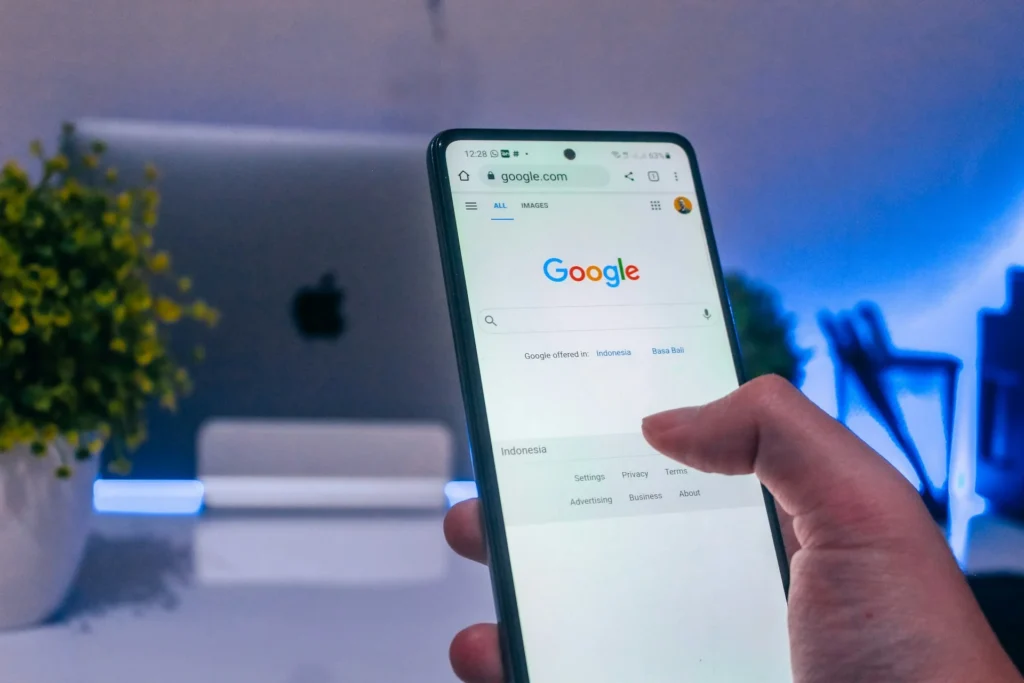
Google Ads: catching people who are already looking
Google Ads works on intent. When someone searches “emergency plumber near me” or “buy running shoes online,” they’ve already decided they want something — your ad just needs to be the answer they click. This makes Google Ads especially strong for:
- Businesses with a clear, searchable need (trades, professional services, ecommerce)
- Situations where customers actively compare options before buying
- Local businesses wanting to appear when someone searches nearby
The trade-off is competition. If several businesses are bidding on the same high-intent keywords, cost-per-click can climb quickly, especially in crowded industries.
Meta Ads: reaching people before they’re searching
Meta Ads (Facebook and Instagram) work differently. Nobody is “searching” in their feed — they’re scrolling, and your ad needs to interrupt that scroll with something relevant enough to stop for. This makes Meta strong for:
- Building awareness for a product or service people don’t yet know they need
- Visually appealing products that benefit from strong imagery or video
- Retargeting people who’ve already visited your website but didn’t convert
The trade-off here is that you’re often introducing your brand cold, which usually means a longer journey from first impression to actual sale.
So which should you start with?
Ask yourself one question: are your customers actively searching for what you offer, or do you need to create the desire first? If it’s the former, start with Google. If it’s the latter, Meta is often the better entry point.
For many businesses, the real answer is both — eventually. Google captures the demand that already exists, while Meta builds the audience that will search for you tomorrow. Running them together, with consistent messaging and shared retargeting data, is usually where we see the strongest results.
The mistake to avoid
The biggest waste of ad budget we see isn’t choosing the “wrong” platform — it’s launching without a clear, honest target for what success looks like. Before you spend a penny, know your target cost-per-result and what a converted customer is actually worth to your business. Without that, you’re not really measuring performance — you’re just watching numbers move.